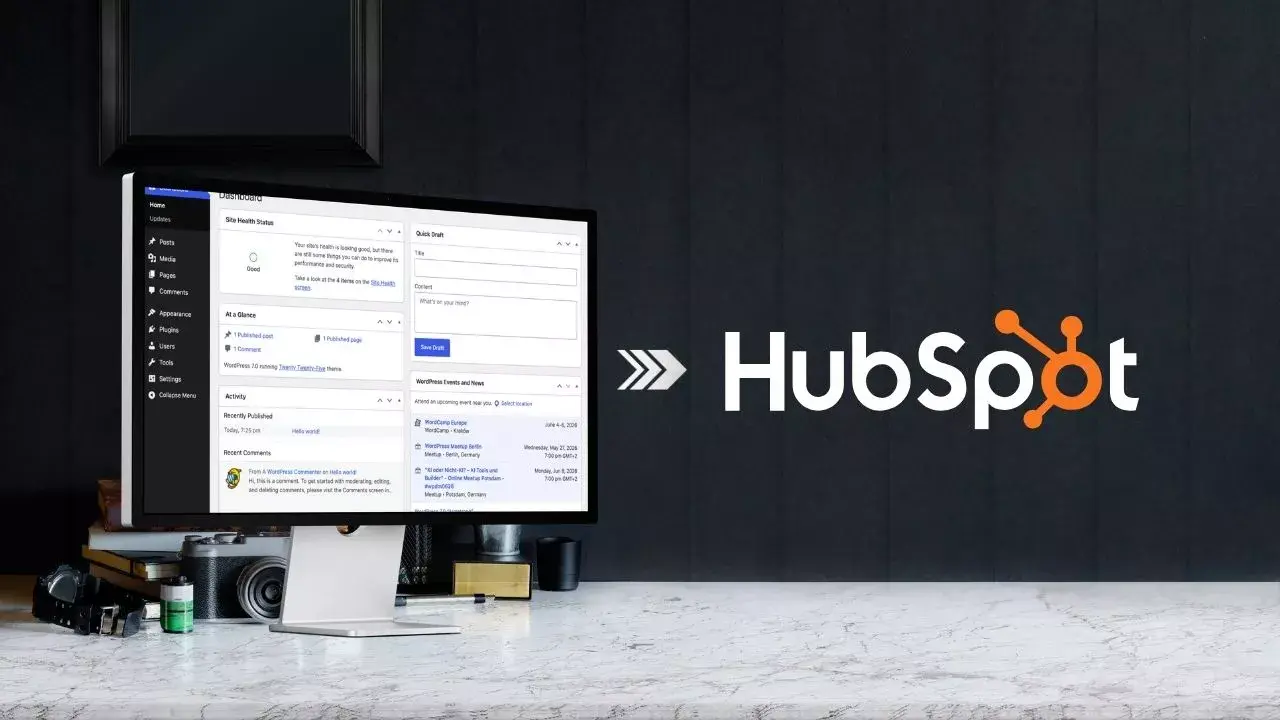






Why are companies switching from Salesforce?
19 Oct 2026

A CRM connects marketing, sales and customer service around the same customer data. We set it up for how you sell: pipelines, properties, automation and reports, built on your process.
We plan, configure and migrate, then train the team and stay to improve it. We work in HubSpot, Salesforce and other platforms, and set up the one that fits how you work.
Companies usually come to us when one of these sounds familiar.
Data, processes and users need to move with it.
Deals and activities live in spreadsheets and inboxes.
Reports don't match, or nobody relies on them.
Leads are handed over without context.
Marketing, sales and service see the same history.
Leadership sees what's happening and what's coming.
Automation handles follow-ups, tasks and handovers.
Customer data shows where the next deal is.


We map how you sell and serve, and what the CRM needs to support.
Pipelines, properties, permissions, automation and reports.
Clean, structured data moved from your old system or spreadsheets.
Connections to your website, marketing platform and ERP.
Training by role, so everyone knows how the CRM helps them.
01
We align mission, market reality and growth objectives before anything is agreed or scoped. Every initiative we recommend is rooted in our client’s reality, not in what we’ve built for someone else.

02
We audit the sales journey and technology stack, mapping where buying signals are missed, where data is fragmented, and where your team has quietly stopped trusting the tools they use. Not every problem needs a technical solution.

03
CRM, marketing automation and user experience designed to work as one. We build on what works today, with new tools only where they earn their place. This stage produces a clear roadmap: what gets built, in what order, and what commercial outcome each part is building toward.

04
Steady monthly cycles. The CRM starts capturing buying signals from day one. Each cycle has a defined scope, a clear deliverable and a commercial outcome it’s building toward.

05
Growth should never stall. Real performance data drives every refinement, and we report on it every quarter. We optimize workflows for how your team actually works, not how a system expects them to.





“They spent the first month telling us what was broken rather than selling us a fix. Nothing got built until we had agreed what it was supposed to move.”
“The people who wrote the strategy were the people who built it. Nothing was lost in between, because there was no in between.”
“Leadfront took a marketing operation we had long outgrown and rebuilt it around how we actually sell. The difference showed up in the pipeline inside a quarter.”
“Four country sites, three content systems, and no two pages built the same way. We run all of it ourselves now, in four languages.”
A standard implementation usually takes 8 to 16 weeks, from discovery to configuration, migration and testing. Larger setups take longer.
It depends on how you sell, what you already use and the total cost over time. If you haven't decided, System Procurement helps you choose.
We map, clean and test the data before it's moved, so the new CRM starts with data you can trust.
No. We build and test in a sandbox first, so your current systems keep running until the planned switch.
We build it around how they work and train each role. Adoption & Training can follow up after go-live.
Tell us how you sell today and where you want to be.